

Assessment
Educational Psychology Assessments in Warrington
Thank you for considering a private educational psychology assessment with MC Psychology. Dr Matthew Coxon, is an HCPC-registered educational psychologist based in Warrington.
If your child is finding school harder than it should be, you are concerned about their mental health, attendance is difficult, or there are specific concerns about particular areas of learning, such as literacy, or numeracy, an educational psychology assessment can help you understand why, and what will actually help. Assessments are carried out in Warrington and the surrounding areas, at your home, or online.
What is an educational psychology assessment?
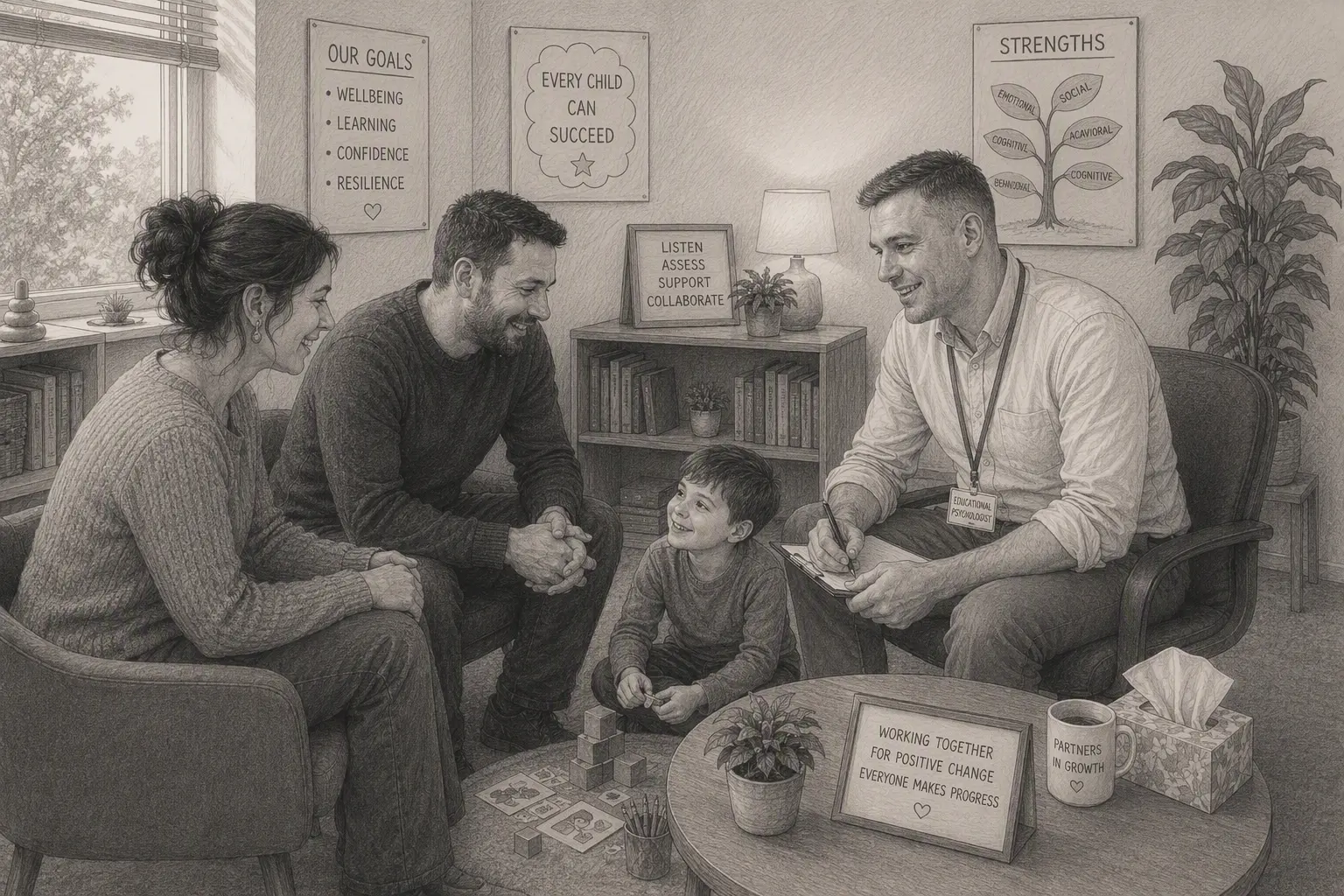
At MC Psychology, we are able to provide you with a full Educational Psychology assessment that meets the criteria of an Educational Health and Care Plan needs assessment. Alternatively, you may wish to meet for consultation to share worries in a particular area. You may also wish to understand more about how your child learns, commissioning a Cogntive Assessment. We work in bespoke way, responding to your needs with an honest appraisal of what may help you. An educational psychology assessment is a structured way of understanding how a child or young person learns, what is getting in the way, and what support will make a difference. It is not a single test. It brings together conversation with you, information from school, direct work with your child, and — where useful — standardised and dynamic assessment. The purpose is understanding, not labelling.
Why do parents and schools seek an assessment?
Families get in touch for many reasons, school may have raised concerns, or by our child may be expressing distress about school to you. An assessment gives you language for what is happening and a set of recommendations that can be used straight away in the classroom and at home.
What can be explored
- Cognition and learning: for example, reasoning, working memory, processing speed, and attention
- Literacy and numeracy; we can explore attainment, aswell as key skills the child needs support with to regain their progress in these areas
- Communication and interaction; we will explore why a child may struggle with their peer relationships, understanding of others, other how to resolve disputes.
- Social, emotional and mental health, including anxiety and self-esteem
- How a child responds to teaching and support (dynamic assessment)
- The environments around the child: classroom, relationships, routines at home
Before the assessment
We start with a free 30-minute conversation to understand your concerns and identify our best route forward. If you go ahead, you complete a background questionnaire, and with your consent I gather the school's view — current support, progress data, and what staff are noticing day to day.
During the assessment
Direct work with your child usually takes place over a morning or an afternoon, with breaks led by your child's needs. It is a relaxed, conversational session with assessment activities adjusted to your child's tolerance; many children find it enjoyable. Depending on the questions being asked, it may include standardised assessment of reasoning, memory, processing and attainment, or dynamic assessment to see how your child learns when support is offered.
After the assessment
You receive a written report and a feedback conversation in which we go through the findings together, in plain English, so you know what they mean in practice. The report can be shared with school and with other professionals, and can be used to support an EHC needs assessment request.
What the report includes
- A clear picture of your child's strengths and interests
- What the assessment found and what it means in everyday terms
- Your child's own views about school and learning
- Specific, achievable recommendations for the classroom
- Practical suggestions for home
- Where relevant, advice framed to support statutory processes
How recommendations support your child and their school
Recommendations are written to be used, not filed. They describe how a task might be presented differently, what adult support looks like, which strategies are worth trialling, and how progress can be reviewed. Schools are far more able to act on advice that is specific, realistic and linked to what they already do.
Where assessments take place
Assessments are based in Warrington and are carried out at your home, in your child's school, or online. Surrounding areas served include Lymm, Stockton Heath, Grappenhall, Appleton, Great Sankey, Penketh, Culcheth, Newton-le-Willows, Runcorn, Widnes, Northwich, Knutsford, alongside wider work across Liverpool, Manchester and the UK.
Fees and enquiries
Every piece of work is slightly different, so fees depend on the questions you want answered and the assessment involved. The clearest way to find out is a free 30-minute conversation to understand your concerns and identify our best route forward, after which you receive a written quote before committing to anything.
Talk it through first
A free 30-minute conversation is the best place to start. Describe what you are seeing, ask questions, and get an honest view on whether an assessment in Warrington is the right next step for your child.